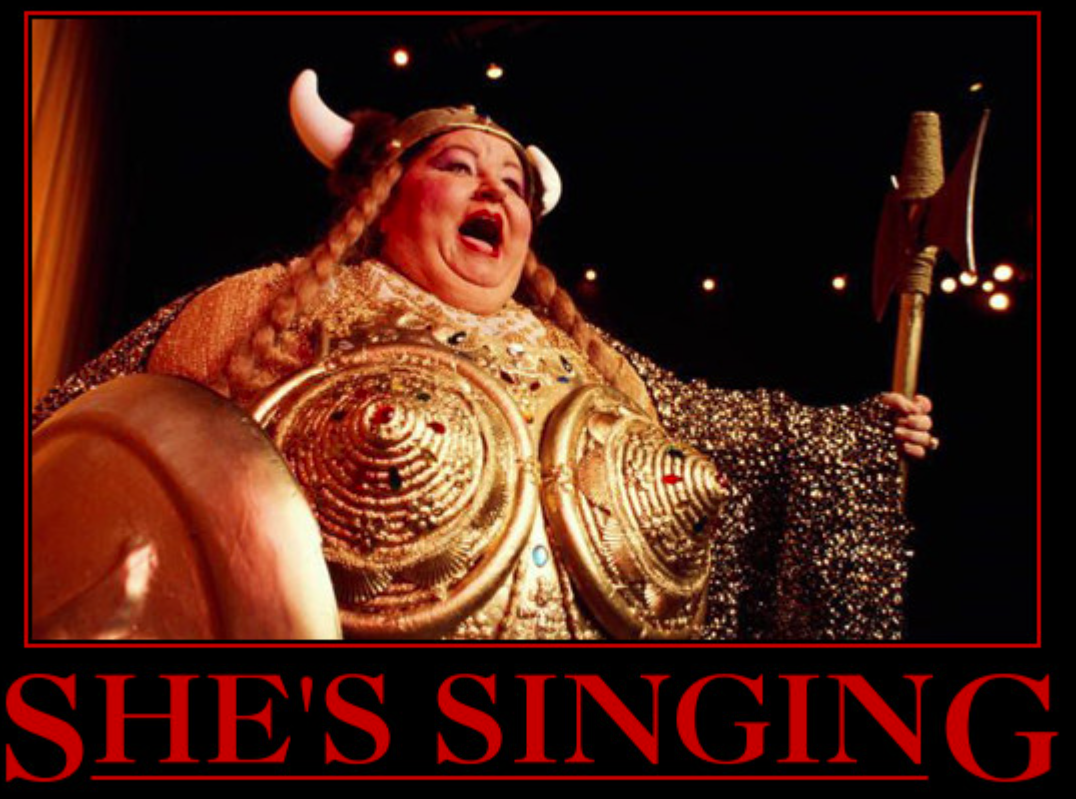


What will we conclude when the fat lady sings next Tuesday, the day after, the week after, or who knows how long after she sustains the aria? What truths will be taken from the outcome of the election? What lies will be conjured to explain an outcome we don’t like? Indeed, what lies will be conjured to explain an outcome we do?
Who will gloat? Who will claim a stolen election? Who will claim the masses are asses?
Will the final result be seen as an affirmation that all of Park County rejects a woman’s sovereignty over her own body, that anyone who votes Democratic must answer to God for their evil deed?

Will District 2 commissioner candidate Jason Gemmer’s assertion that “huge” illegal migrant camps are popping up in the outskirts of Como be vindicated if he wins? Will that claim remain a flagrant red herring if he loses? Or even if he wins?
Will Evangelicals who have urged us all to vote for our Biblical principles in the guise of Donald Trump, Jason Gemmer, and Amy Mitchell prevail with a Hallelujah! Will God’s will have provided the votes to accomplish wins for all three? If one or any of those three lose, will that also have been God’s will? What if Donald Trump, God’s chosen, loses?

Indeed, some will be very sad if God’s chosen one loses.
We tend to view our current political predicament as uniquely nasty, something that has never occurred in America before, an apocalyptic event that, depending upon who wins or loses, we will never recover from—the country’s fate stands in the balance. And even though I cannot help but share these sentiments, I cannot escape history. None of us can.

The presidential campaign of 1800, the fourth in our history, was the first time the entire gamut of what we’ve come to know as the nastiness of party politics was fully displayed. John Adams, the Federalist, against Jefferson, the Democrat-Republican, and their minions served up a phantasmagoria of mud, lies, deceit, and mendacity. Jefferson was depicted as an infidel and an atheist who supported a separation of church and state. Adams became a hypocritical elite who would merge the church with the state, perhaps even returning to a monarchy.
Adams was described as a blind, bald, cripple, toothless man with a hideous hermaphroditic character. Jefferson would welcome murder, robbery, rape, adultery, and incest if elected.
Interestingly, Adam’s Federalist government was responsible for the Alien and Sedition Acts of 1798, portions of which Donald Trump says he will use to deport millions of immigrants from America. Parts of the Acts also restricted free speech and freedom of the press. The Acts were so distasteful to Americans that Jefferson’s victory over Adams in 1800 is significantly attributed to the Alien and Sedition Acts of 1798.
It is accurate to say that every presidential election after 1800 was nasty, some to a lesser or greater degree than others. It is also accurate to say that America has never been ideologically united. With the advent of political parties, something George Washington and other Founders detested, those ideological differences were amplified and exploited.
With the advent of the Trump Era, the amplifications and exploitations we’d experienced with political parties were further compounded by a segment of the American people who found their biases best represented by a person rather than a party, a cult of personality, if you will, that places a premium on absolute devotion to a person rather than the best interests of the country.
H.L. Mencken wrote, “As democracy is perfected, the office of president represents, more and more closely, the inner soul of the people. On some great and glorious day, the plain folks of the land will reach their heart’s desire at last, and the White House will be adorned by a downright moron.”
I prefer to revise Mencken’s thought this way: Democracy is increasingly devalued by a segment of the American people who have bought the con of a demagogue of ferocious intent who exploits their biases. “In a populist culture like ours,” as the historian Richard Hofstadter said, “…in which it is possible to exploit the wildest currents of public sentiment for private purposes, it is at least conceivable that a highly organized, vocal, active, and well-financed minority could create a political climate in which the rational pursuit of our well-being and safety would become impossible.”
So, if we perceive the fat lady eventually singing a dismal dirge, will we be comforted knowing our American political experience has, since the days of the founding, been a delicate balance, an exercise in separating the wheat from the chaff? Will we acknowledge the chaff has finally risen to the top as mindless devotion to a con man’s ravings?

Ravings from a fat, old man that are more suited to a roadside motel’s Wednesday and Saturday Comedy Night Extravaganzas in a shag-carpeted cocktail lounge, where titters of glee from a sparse crowd of well-oiled “patriots” think they, too, would instead be electrocuted than eaten by sharks.

Or will the fat lady delight us with a bright, brilliant, hopeful aria of a country not seen as the garbage heap of the world, but, as Reagan said in his Farewell Address, “I’ve spoken of the shining city all my political life, but I don’t know if I ever quite communicated what I saw when I said it. But in my mind, it was a tall, proud city built on rocks stronger than oceans, wind-swept, God-blessed, and teeming with people of all kinds living in harmony and peace; a city with free ports that hummed with commerce and creativity. And if there had to be city walls, the walls had doors, and the doors were open to anyone with the will and the heart to get here. That’s how I saw it and see it still.”
I don’t know what the fat lady will sing.
We can hope for the best…


I appreciate your writing…