
Park County People

We’ve just sat in a booth when Herman Goering slides in with us and sets his tall mug of dark beer on the table in front of him. His name, Hank G, is stenciled on the mug, and when he’s not here, it hangs empty from above the bar along with about thirty others. Everybody calls him Hank. We don’t know why but we assume he likes Hank better than Herman. I hadn’t questioned the obvious about his first and last names when he’d handed David and me the quote on the roof he’s going to install on our house in a couple of months. That was the first time I’d met him. That was when I looked at the quote and saw the name, Herman Goering, printed at the bottom of the page with his signature above it. That first meeting was notable, too, for the filthy, sweat-soaked burgundy-colored Stetson he wore. Also, his handlebar mustache was as wiry as a steel wool cleaning pad that’s come undone. I noticed, too, the hint of amusement and mischief in his blue-white eyes.
Hank shoots the shit with us for a minute, then sees one of his compadres come in the front door. He slides out of the booth and joins his buddy at the bar. That’s fine by me. We’d heard most of his stories and lies when we invited him into our home for a beer after he inspected our roof. Told us he was sixty-two and had been in the roofing business since he was sixteen, which was about when he started riding bulls. Said he’d gone pro before he was twenty and took his last ride on a mean sonofabitch named Frenzy when he was twenty-four. Broke his arm, shoulder, and back on that ride and then went to Idaho for reasons he didn’t explain. He didn’t mention either that his ancestry harkened back to Adolf Hitler’s right-hand man—Hermann Göring. Maybe it didn’t. After all, he had only one n in his first name. But I can understand his reluctance to talk about it if he was related.
There’re lots of characters up here, like Hank. We’ve met a few, and not one of them has questioned David and me about our relationship. So I guess living and letting live is the rule up here.
David and I have stopped at the café, which sits just off U.S. Route 285, thirteen miles southwest of Conifer, Colorado, about an hour’s drive southwest of Denver. The highway is an 846-mile stretch of road that starts out or ends up in Denver, Colorado, or Sanderson, Texas, depending on where you’re coming from or going. Interestingly, 285 is called the Highway of Death in both states.
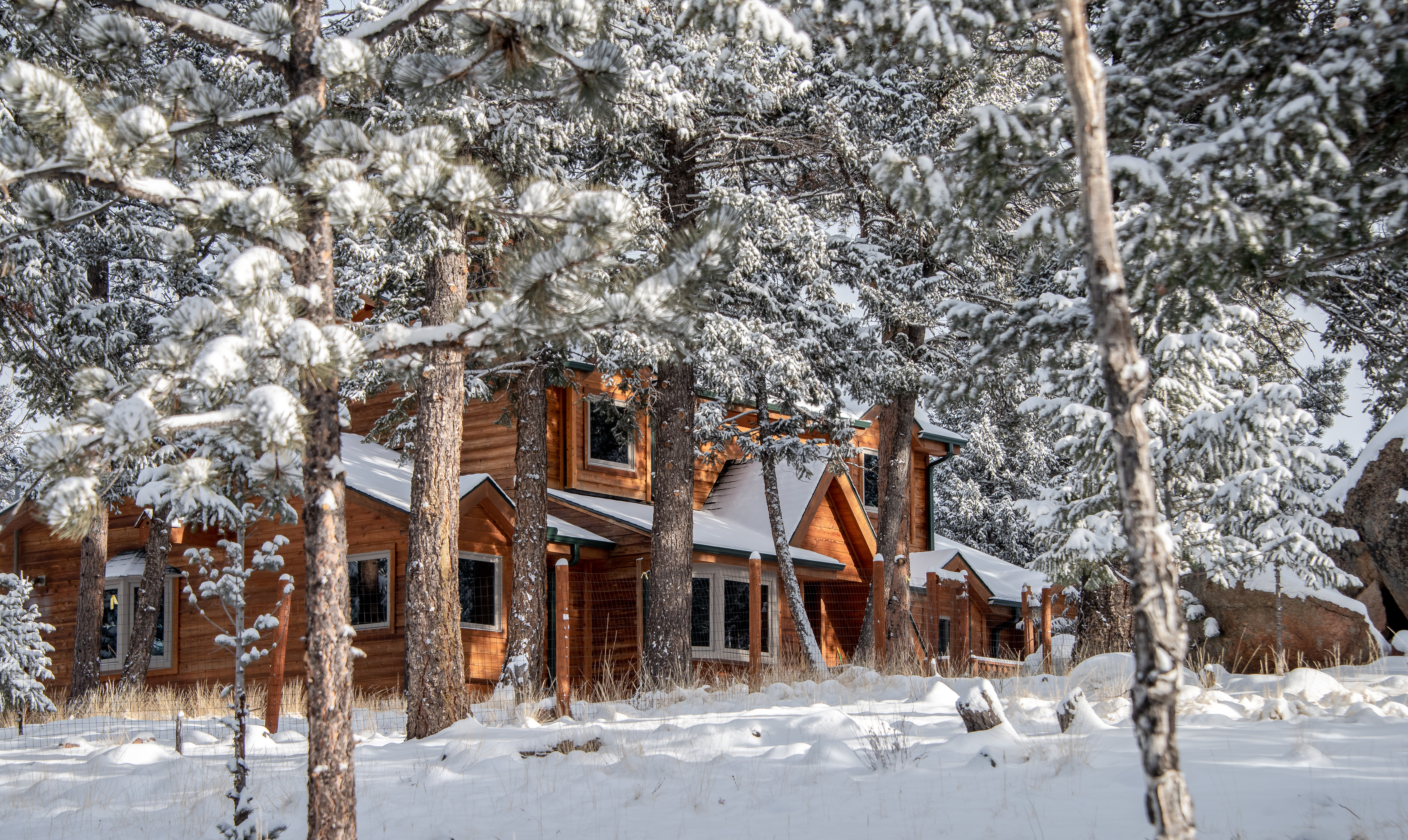
We drove down from our home three miles northwest of here. It’s a lovely house with ten acres of forest surrounding it. We eat at the café two days a week because it’s close, the food isn’t bad, and the ambiance is unaffected and about as laid-back as a Unitarian’s Sunday service. We’d have to drive another ten miles down the mountain to get something fancier to eat. But, and I think David agrees, we don’t look for fancy anymore in our surroundings or cuisine.
The blackboard inside the front door advertised fish and chips as the special, and the featured soup was chicken enchilada. Since it’s happy hour, my BPR is half-price, as is David’s merlot. I asked the server if the cook could leave about half the grease out of the fish, and she said she would ask him to do that. I hope she does because it’s always nice not to squeeze the oil out of the fish like water from a sponge before I eat it. David orders the burger with mushrooms and jalapeno peppers. The music is less obtrusive than what it was the last time we were here, and I’m tapping my foot to the strains of America’s “Lonely People.” I’ve loved that song for a long time.
I turn and look at the bar. I see Hank and his buddy in a quiet conversation with each another. An older woman in tight jeans with a gray ponytail hanging down her back sits at the corner of the bar. She nurses her beer and stares longingly at Hank as if she’s been there, done that, liked it a lot, and now regrets Hank’s apparent disinterest in her. The others at the bar are talking loud and laughing at some damned thing one of them has said.
So, that is the way it is up here. Except for David, and my extended family, people have become irrelevant to my life. No, that’s not entirely true. I haven’t talked to my sister in ten years and have no plans to do so in the foreseeable future. I don’t like her, and I don’t apologize for that.
I do, though, admire folks up here with skills I never learned—roofing, plumbing, carpentry. The guys like Hank and others who’ve come in handy as David and I settle into this new life adventure. Our closest neighbor down the road is okay, too; she’s an old lesbian who’s lately had some hip problems.
So for many years, I’ve ratcheted up my pessimistic view of mankind. But, having moved up the mountain, I’ve begun to ratchet it down, valuing the best of it when it shows itself.
Our dinner is good as usual, and I beg off on another beer. I wave at Hank as David and I walk down the aisle, then step outside.
Update: Herman never did show up to put a new roof on our house and wouldn’t return my calls when I left a message. I’ve since learned that that also is something we have to deal with on the mountain. Skilled tradesmen are so valued up here they can pick and choose when and where they show up to do a job. They can also ignore you if they want to. So I give Herman the benefit of the doubt. I don’t ascribe to him some innate fear or loathing of David and me, our forty-year relationship. Hell, if he does have that fear or loathing, I guess some things are much harder to overcome than getting stomped by a mean bull. Or maybe he is related to his infamous namesake, a genetic quirk he can do nothing about.


